
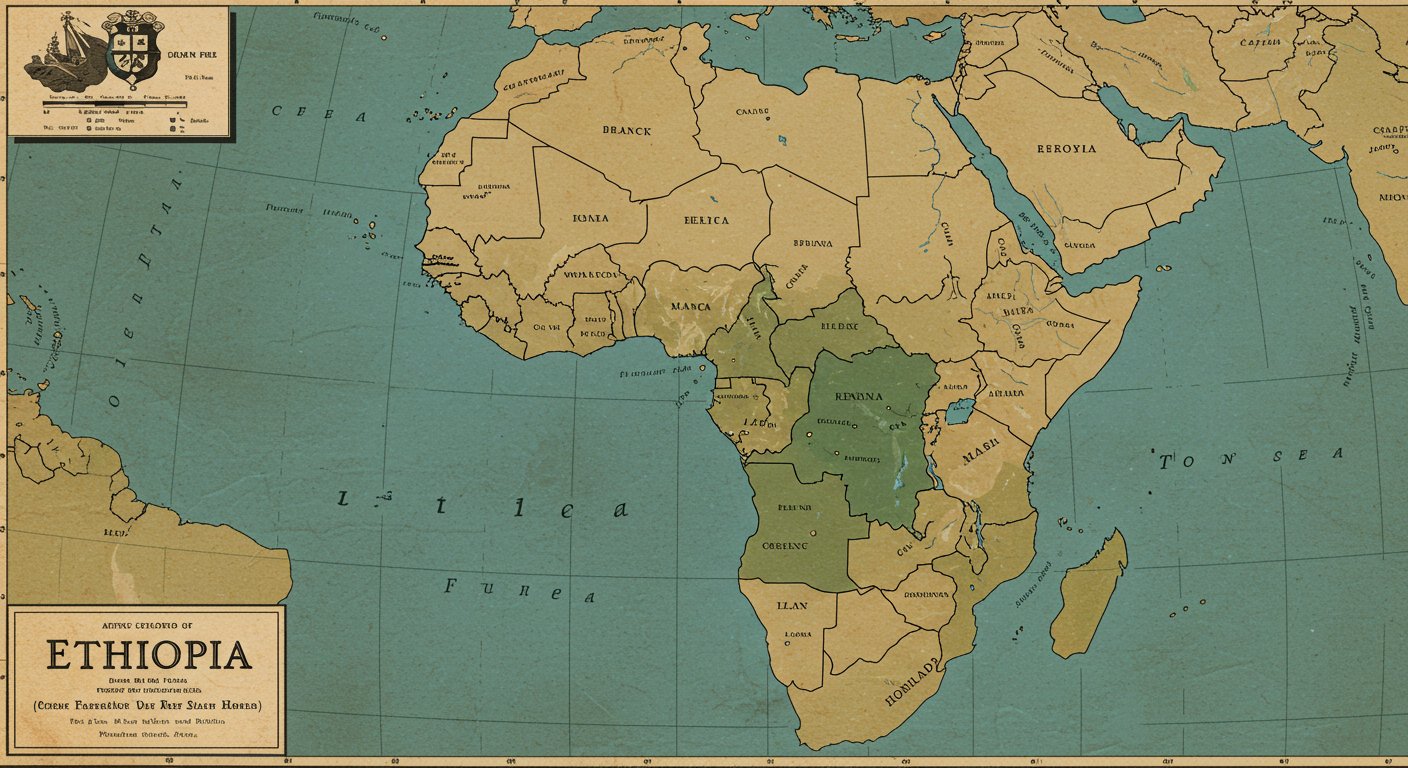
In the late 19th century, European powers aggressively colonized Africa, with Italy targeting Ethiopia. However, the Ethiopian forces defeated the Italian troops near Adwa on March 1, 1896, securing their independence and inspiring the anti-colonial movement.
European nations began exploring Africa in the 1400s primarily for the trans-Atlantic slave trade, but faced challenges due to diseases and navigation. By 1870, with the decline of the slave trade, Europeans controlled only 10% of the continent.
The ‘Scramble for Africa’
By 1885, the Scramble for Africa was in full swing, with major European powers like the United Kingdom, France, Germany, Italy, Belgium, Spain, and Portugal dividing up the continent. Only Liberia and Ethiopia remained independent during the peak of colonialism.
Italy, a newcomer to colonialism, began its military expansion in 1885 by occupying the Red Sea port of Massawa with British support. It then extended its control to Eritrea, previously part of Ethiopia, and parts of Somalia. Italy’s military activities escalated after a significant loss of 500 soldiers in an 1887 battle.
In 1889, Italy signed a treaty with Ethiopia’s Emperor Menelik II, where he acknowledged Italy’s claim to Eritrea in exchange for arms and money. However, a dispute arose over whether the treaty made Ethiopia an Italian protectorate, leading to disagreements due to differences in the Italian and Amharic versions of the text.
Menelik Calls Up Mass Mobilization
Menelik and Taytu Betul, who claimed descent from King Solomon and the Queen of Sheba, were determined to protect their sovereignty against European expansionism. They acquired modern weapons and sought support from sympathetic Europeans for a public relations campaign.
Alfred, a Swiss-born engineer and Menelik’s de facto chief of staff, played a key role in modernizing Ethiopia’s infrastructure and promoting the country as “Africa’s Switzerland.” Other Europeans wrote positive articles about the Ethiopian court, praising Menelik as “Africa’s Christian monarch.” Menelik became a celebrity and even exchanged messages with Queen Victoria of England. Haile describes Menelik as a charismatic and approachable monarch.
Italians Retreat, Ethiopia Gains Independence
When the conflict erupted on March 1, the Italians and their African allies were quickly overwhelmed, disorganized, and outnumbered in harsh terrain. By the end of the day, they were in full retreat, leaving behind their artillery and about 3,000 prisoners. Menelik outwitted the Italians in every way, leading to their defeat. Women played crucial roles in the victory, providing water, medical aid, guarding prisoners, and boosting morale.
The Ethiopians inflicted heavy casualties on the Italians, capturing many prisoners. The Italian captives were treated well and gradually released, while African soldiers fighting with the Italians reportedly faced severe punishment. This battle marked a significant shift in racial dynamics.
Following the battle, Italy recognized Ethiopian independence, and European powers negotiated borders with Menelik. The victory at Adwa challenged European perceptions of Africans and forced them to take Africans more seriously.
Despite later Italian occupation under Mussolini, Ethiopian resistance inspired future African independence movements and Pan-Africanism. The legacy of Adwa also influenced popular culture, as seen in the portrayal of Wakanda in the Black Panther franchise as an uncolonized African nation.